Calculate Your Dental Gold Value – Live Gold Price
Got old dental crowns, bridges, or a partial denture sitting in a drawer? Before you toss them or let them collect dust, use this dental gold value calculator to find out exactly what they’re worth at today’s live gold price. Enter the weight and karat, and you’ll instantly see the scrap value, the per-gram price, and a realistic pawn shop estimate.
What Is Your Dental Gold Actually Worth?
Most crowns and bridges are 16K–20K. Use 16K if unsure.
Enter the weight and karat on the left.
Your results will appear here instantly.
Your dental gold is worth approximately
Scrap value is the theoretical max. Online refiners pay 70–90%, local buyers 60–75%, pawn shops 30–50%. Knowing the gap gives you leverage before you sell.
Live gold price via SpotGoldValue.com. Values are estimates — actual payouts vary by buyer and testing method.
What Is Dental Gold?
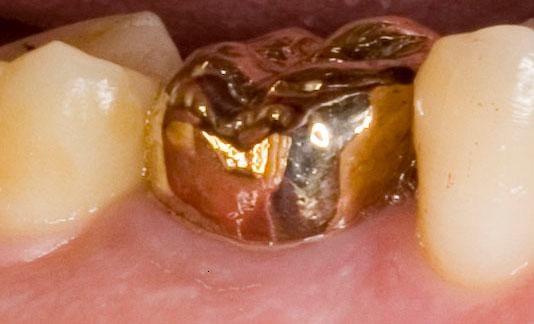
Dental gold is a gold alloy specifically formulated for use in the mouth. Pure gold (24K) is too soft to survive the pressure of chewing, so dentists use alloyed versions mixed with metals like silver, copper, palladium, and sometimes platinum. These additions make the material harder, more wear-resistant, and better suited to a dental environment.
The gold content in dental work typically falls between 10 karat and 20 karat, depending on the application. Crowns and bridges tend to use higher karat alloys, often 16K to 20K, while older or less expensive dental work may be lower. Some gold foil fillings, though rare today, are actually 24K pure gold.
Because dental gold isn’t stamped or hallmarked the way jewelry is, you often won’t know the exact karat without testing. The most accurate method is XRF (X-ray fluorescence) testing, which most professional gold buyers offer. For a quick estimate, 16K is a reasonable conservative assumption for most dental gold.
Common Dental Gold Items and Their Typical Value
Not sure what you have or what it might be worth? Here’s a breakdown of the most common types of dental gold, with typical weight and karat ranges so you can get a realistic estimate before you even pick up the calculator.
| Dental Item | Typical Weight | Common Karat | Gold Purity | Avg. Scrap Value* |
|---|---|---|---|---|
| Gold Crown | 2–5 grams | 16K–20K (often 18K) | 66%–83% | $90–$350 |
| Gold Bridge (full) | 6–15 grams | 16K–20K | 66%–83% | $270–$1,050+ |
| Gold Bridge (per unit) | 2–5 grams | 16K–20K | 66%–83% | $90–$350 |
| Gold Inlay / Onlay | 1–3 grams | 18K–20K | 75%–83% | $55–$220 |
| Gold Foil Filling | Under 1 gram | 24K | 99.9% | Up to $90 |
| Gold Post / Core | 1–2 grams | 16K–18K | 66%–75% | $45–$130 |
| Partial Denture | 5–10+ grams | 16K–18K | 66%–75% | $225–$730+ |
*Estimates based on approximately $90/gram for 18K equivalent gold. Actual values vary with live gold price, exact karat, and buyer payout percentage.
How Is Dental Gold Value Calculated?
The math behind dental gold value comes down to three things: the weight of the piece, its gold purity (karat), and the current live gold spot price. Here’s how it works step by step.
Step 1: Determine the Pure Gold Content
Each karat represents a ratio of gold to other metals. 24K is 99.9% pure gold. 18K is 75% gold. 16K is 66.7% gold. To find the pure gold content in your item, you multiply the total weight by the karat’s purity percentage.
Example: A 4-gram dental crown at 18K contains 4 × 0.75 = 3 grams of pure gold.
Step 2: Apply the Live Gold Spot Price
The gold spot price is the current market price for one troy ounce of pure gold. Since we’re working in grams, you divide the spot price by 31.1 (the number of grams in a troy ounce) to get the price per gram of pure gold.
Example: If gold is at $3,000/oz, the pure gold price is $3,000 ÷ 31.1 = ~$96.46 per gram.
Step 3: Calculate the Scrap Value
Multiply the pure gold gram weight by the price per gram. That’s your scrap value — the theoretical full market value of the gold in your piece. Example: 3 grams of pure gold × $96.46 = $289.38 scrap value.
Step 4: Factor In the Buyer’s Payout Percentage
No buyer pays 100% of spot. Refiners, gold buyers, and pawn shops all take a cut. The calculator shows you the full scrap value and a separate pawn shop estimate, so you know both the ceiling and a realistic floor for what you’ll actually receive.
Where to Sell Dental Gold
Once you know what your dental gold is worth, the next question is where to sell it. Here’s a straight comparison of your main options.
Online Gold Refiners
Online refiners typically offer the highest payouts, often 70% to 90% of melt value. You mail in your gold, they test it, and send payment. The downside is you don’t get instant cash and you’re trusting your gold to the mail. Look for refiners that offer insured shipping labels and video-recorded unboxing.
Local Gold Buyers
Local buyers offer same-day cash and you can negotiate face to face. Payouts typically range from 60% to 75% of melt value. Quality varies a lot by shop, so it’s worth calling ahead, asking how they test dental gold, and getting quotes from two or three places.
Pawn Shops
Fast and convenient, but pawn shops generally offer the lowest payouts, typically 30% to 50% of melt value. They’re useful if you need cash today and convenience outweighs maximizing the return. Use our gold calculator to know exactly what to expect before you walk in.
Dental Refineries (for Dentists and Dental Offices)
If you’re a dental professional with accumulated scrap, dedicated dental refineries offer competitive rates for bulk submissions and often provide assay reports. They deal specifically in dental alloys and understand the material better than a general gold buyer.
How Much Will You Actually Get?
The scrap value in the calculator is the theoretical maximum — what your gold is worth if someone paid you 100% of spot. In practice, buyers pay a percentage of that number. Here’s what to realistically expect.
| Buyer Type | Typical Payout % | Speed | Best For |
|---|---|---|---|
| Online Refiner | 70%–90% | 3–7 days | Maximizing return |
| Local Gold Buyer | 60%–75% | Same day | Balance of speed & value |
| Pawn Shop | 30%–50% | Immediate | Instant cash, lower return |
| Dental Refinery (bulk) | 75%–92% | 5–10 days | Dental professionals |
A few things that can affect your actual payout: the current gold price (which moves daily), the exact karat of your dental gold, whether the buyer uses XRF testing or less accurate acid tests, and simply how well you negotiate. Knowing the scrap value from the calculator puts you in a much stronger position before any negotiation.
Frequently Asked Questions
Yes, dental gold is real gold — it’s just alloyed with other metals like silver, palladium, or platinum to make it harder and more durable. The gold content varies depending on the karat, which typically ranges from 10K to 20K in dental work. Higher karat means more gold, which means more value.
Most dental gold isn’t stamped the way jewelry is, so you can’t always tell by looking. Your best options are: ask your dentist for records of the materials used, take it to a gold buyer who offers XRF (X-ray fluorescence) testing, or use an acid test kit. If you’re unsure, use the calculator with 16K as a conservative estimate.
Not really. Gold buyers and refiners are interested in the metal content, not the condition. A crown that’s been in someone’s mouth for 20 years is worth the same as a brand new one if the karat and weight are the same. Don’t worry about cleaning or polishing it before selling.
Yes. Most refiners and gold buyers accept dental gold with porcelain, cement, or tooth material still attached. They’ll account for that in the weight. If you want the most accurate calculator result, try to weigh just the metal portion separately, but it’s not required to sell.
Pawn shops typically offer 30–50% of the melt value. That’s their business model — they need room to resell or liquidate. Use the calculator’s pawn shop estimate as a realistic floor. Specialist gold buyers and online refiners generally pay significantly more, often 70–90% of spot.
Scrap value is what your dental gold is theoretically worth based on its pure gold content at today’s live spot price. Pawn shop value is what you’ll realistically receive at a pawn shop — usually much less because they factor in profit margin, uncertainty, and resale risk.
Not necessarily more per gram — value is determined by karat and weight. However, dental gold is often high karat (16K–20K) which can make individual pieces more valuable per gram than common 10K or 14K jewelry. Bridges and partials can weigh quite a bit, so the total value adds up quickly.
No. Most buyers accept dental gold as-is, whether it’s been extracted or is still part of a bridge or denture. If you have gold in teeth that need to be removed, that’s a job for a dentist — don’t attempt it yourself. Once it’s out, you can sell it through any reputable gold buyer.
The calculator pulls live gold spot prices from the market, so what you see reflects current pricing. Gold prices fluctuate throughout the trading day, so the value you see right now may be slightly different in an hour. For significant amounts of dental gold, check the price again right before you decide to sell.
It depends on how much you have and how quickly you need the cash. Online refiners offer the best payouts (70–90% of melt) but require mailing your gold in. Local gold buyers offer same-day payment at 60–75%. Pawn shops are fastest but pay the least. Dental offices with bulk scrap often use dedicated dental refinery services for competitive rates.
Ready to Find Out What Your Dental Gold Is Worth?
Use the calculator at the top of this page to get a real-time value based on today’s live gold price. No sign-up, no form to fill out — just enter your weight and karat and see exactly what you’re working with.
Calculate My Dental Gold →