Gold Jewelry Calculator
Your Jewelry Details
Your Jewelry Value
Select your jewelry type, enter the weight, pick a karat, and choose a stone setting to see your melt value.
Melt value for your 14K Ring
Melt value is based on live gold price and gold content only. Buyers typically pay 70–85% of melt value. Gemstone value is not included.
What This Gold Jewelry Calculator Shows You
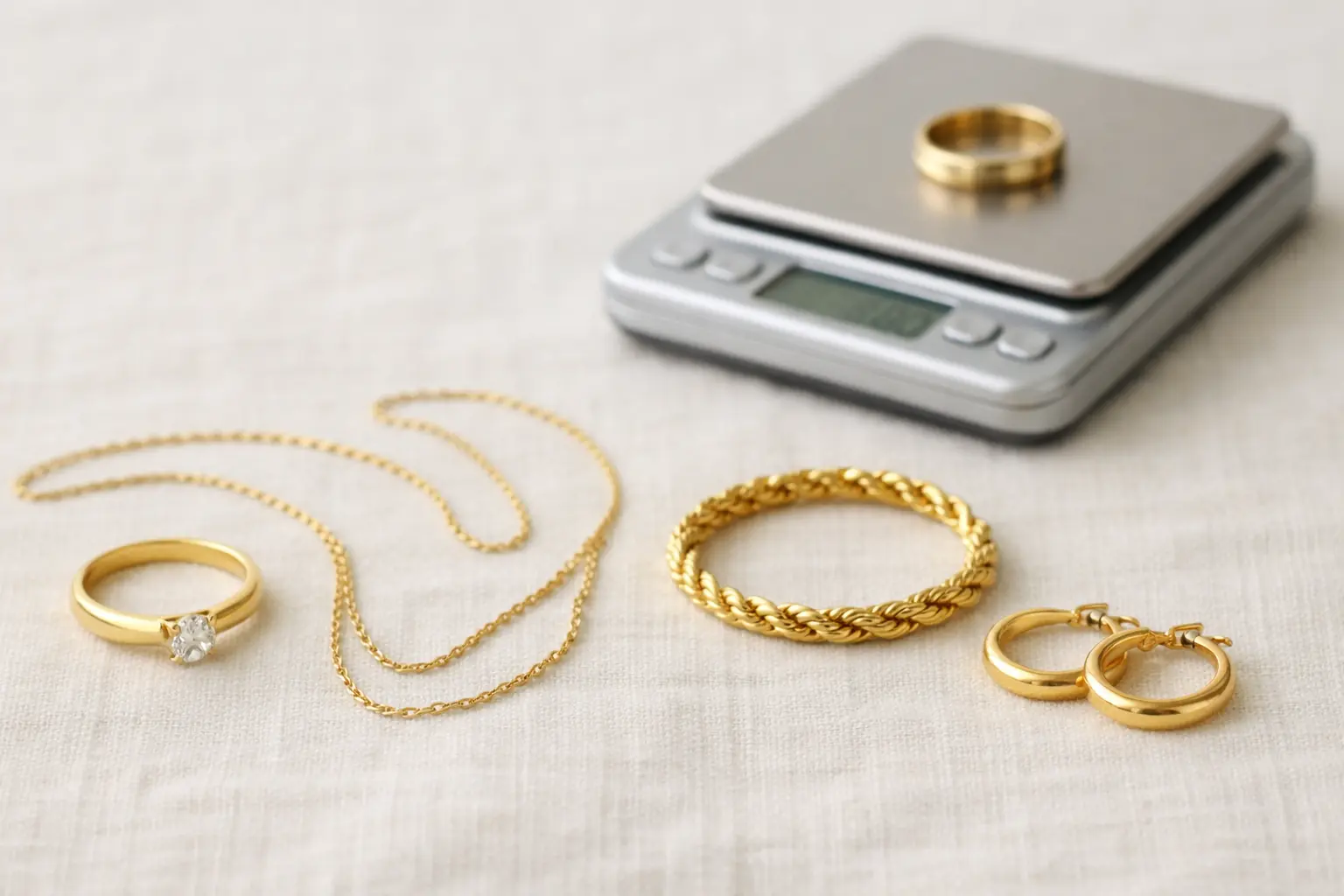
Most people selling gold jewelry have no idea what their pieces are worth before walking into a buyer. This gold jewelry calculator gives you a live melt value based on the actual weight, karat, and current gold price, so you know the number before anyone makes you an offer.
Enter your jewelry type, weight, karat, and whether the piece has stones. The calculator shows the melt value of the gold content, which is the baseline every buyer starts from and the number you need to know before you sell.
How to Use the Gold Jewelry Calculator
Tip: Weigh each piece separately if you have multiple items. Mixed-karat pieces need to be calculated individually since a 10K ring and an 18K bracelet have very different gold content per gram.
Select Your Jewelry Type
Choose the type of piece you want to value: ring, necklace, bracelet, earrings, pendant, or other. This helps you keep track when valuing multiple pieces and does not change the melt value calculation itself.
Enter the Weight
Weigh your jewelry on a small digital kitchen scale. Enter the weight in grams, pennyweights (dwt), or ounces. Grams give the most precise result. If your scale shows troy ounces, multiply by 31.1 to convert to grams. Do not guess the weight. Even a half-gram difference on a heavy piece shifts the result by several dollars.
Select the Karat
Look for a small stamp on the inside of the band or near the clasp. Common stamps are 10K, 14K, 18K, 22K, and 24K. In the USA, 14K is the most common karat for everyday jewelry. If there is no stamp, a professional appraisal or acid test is the right step before you sell.
Choose the Stone Setting
If your piece has diamonds, gemstones, or any set stones, select the appropriate option. The calculator reduces the gold weight by an estimated stone deduction. This is not exact but keeps the melt value realistic. Most scrap gold buyers will not pay extra for stones unless they are certified diamonds of significant size.
What Is Melt Value and Why It Matters
Melt value is what the raw gold in your piece is worth if it were melted down and refined. The formula is simple: weight in grams multiplied by gold purity multiplied by the current price per gram equals melt value.
Every buyer, whether a local gold shop, a pawn shop, or a national dealer, starts from this number. The difference between buyers is what percentage of that melt value they offer you. Knowing your melt value before you sell means you can judge any offer clearly instead of accepting whatever you are told. For more on how gold is priced and traded, the World Gold Council publishes live and historical gold price data.
Gold Jewelry Value by Karat: Price Per Gram Reference
The table below shows how purity translates across common karats. The price per gram for your karat is the 24K price per gram multiplied by that purity percentage. This is what the calculator uses in real time.
| Karat | Gold Purity | Hallmark Stamp | % of 24K Value |
|---|---|---|---|
| 10K | 41.7% | 417 or 10K | 41.7% |
| 14K | 58.3% | 585 or 14K | 58.3% |
| 18K | 75.0% | 750 or 18K | 75.0% |
| 22K | 91.7% | 916 or 22K | 91.7% |
| 24K | 99.9% | 999 or 24K | 100% |
What Buyers Actually Pay vs. Melt Value
No buyer pays full melt value. They need a margin to cover refining, testing, overhead, and profit. Here is a realistic range for what different types of buyers typically offer when you sell gold jewelry for cash:
Get at least three quotes before accepting any offer. Your melt value is the benchmark. Any offer below 70 percent of melt value for standard jewelry is worth walking away from.
What Affects the Selling Price of Your Gold Jewelry
Karat and Purity
Higher karat means more gold content per gram. A 5-gram 18K bracelet contains more gold than a 5-gram 14K bracelet of the same weight. Buyers test every piece, so the karat stamp needs to match the actual gold content.
Weight
The heavier the piece, the more gold it contains. Weight is what drives the calculation more than almost anything else. Always weigh your jewelry before you sell and verify the buyer is recording the same number.
Stones and Non-Gold Parts
Diamonds and gemstones have their own value but most scrap gold buyers do not pay extra for them. Standard practice is to deduct an estimated stone weight from the total before calculating the gold value. If you have a piece with significant diamonds, get a separate appraisal for the stones before selling the gold as scrap.
Resale Value vs. Melt Value
Some pieces are worth more than their melt value. Signed designer jewelry, antique pieces, and items from recognizable brands sometimes carry a resale premium. If your piece might have collector or designer value, get a jeweler’s appraisal before selling to a scrap buyer. Once a piece is melted down, that premium is gone permanently.
Gold, Inflation, and Holding Value
Gold has a long track record of holding its purchasing power through periods of inflation. Jewelry bought years ago at a lower gold price may now be worth considerably more in dollar terms. If you inherited pieces or purchased jewelry years ago, the current melt value could be substantially higher than the original purchase price, especially for heavier high-karat items.
Gold Filled and Gold Plated Jewelry
This calculator is designed for solid gold jewelry only. Gold filled jewelry and gold plated pieces work very differently and this calculator will significantly overestimate their value.
Gold filled jewelry has a layer of gold bonded to a base metal core, typically making up 1/20th of the total weight. Look for a stamp like 1/20 14K GF. The actual gold value is a small fraction of what a solid piece would be worth.
Gold plated pieces have an extremely thin coating of gold over base metal. In almost every case the gold content is so minimal it has no meaningful scrap value.
If you see the letters GF, GP, or RGP on your piece, it is not solid gold. If there is no stamp at all, get the piece tested before assuming it has significant gold content.
When You Need a Professional Appraisal
A melt value calculator gives you the gold content value. It does not assess craftsmanship, brand history, or gemstone value. An appraisal from a certified jeweler makes sense before selling in these situations:
- The piece is signed or appears to be from a known designer or brand
- The piece is antique or looks like it could be from a specific era
- It contains diamonds or colored gemstones that could have significant independent value
- A buyer has offered you considerably more than the melt value with no explanation
- You are settling an estate and need a documented value for legal or tax purposes
An appraisal typically costs between $25 and $100 per item at a certified appraiser. For pieces that carry a meaningful premium above melt value, that cost is easily worth it.
Ready to understand what your jewelry is worth? Use our free scrap gold calculator for a quick melt value on any gold item, or explore the gold selling guide to know exactly what to expect when you go to sell.
Read the Gold Selling GuideFrequently Asked Questions
It is accurate for melt value based on the inputs you provide and the current live gold price. The main variable is how precisely you weigh the piece and whether the karat stamp reflects the actual gold content. For a formal appraisal, consult a certified jeweler.
Melt value is what the raw gold content is worth. Resale value is what a buyer might pay for the piece as jewelry, which could be higher if it has brand, design, or collector appeal. Most everyday jewelry sells at or below melt value. Designer and antique pieces can sell above it.
Pawn shops typically offer 40 to 60 percent of melt value. Use this calculator to find your melt value, then expect a pawn shop offer somewhere in that range. If the offer is below 40 percent of your calculated melt value, it is worth getting a second quote elsewhere.
Price per gram is the current gold spot price converted from troy ounces to grams. One troy ounce equals 31.1035 grams. The price per gram for each karat is calculated by multiplying the 24K gram price by that karat’s purity. For example, 14K gold is 58.3 percent pure, so its price per gram is the 24K price multiplied by 0.583.
No. Gold filled jewelry should not be calculated as solid gold. The actual gold content is only a fraction of the total weight, so this calculator will overestimate its value significantly. Look for the GF marking on your piece before using this tool.
Gold prices change daily. There is no reliable way to know whether the price will be higher or lower next month. If you need cash now, the current melt value is what it is. If you are not in a rush, monitoring the gold price for a few weeks is a reasonable approach before you sell.