
How to Tell if Gold is Real: 9 Proven Methods That Actually Work
Gold is easy to fake and hard to identify by eye alone. Whether you picked up a piece at an antique shop, received jewelry as a gift, or found something in an old box, these nine methods will make you how to tell if gold is real, before you spend a dollar on a jeweler.
Start with the stamp. Then run one or two quick home tests to confirm. If you are still unsure, take it to a professional.
To tell if gold is real, start by checking the stamp. A plain karat number (10K, 14K, 18K) means solid gold, while letters like GP or GF after the karat mean it is not solid gold. Confirm with a magnet test since real gold is not magnetic. For a definitive result, use a nitric acid testing kit or take the piece to a professional jeweler.
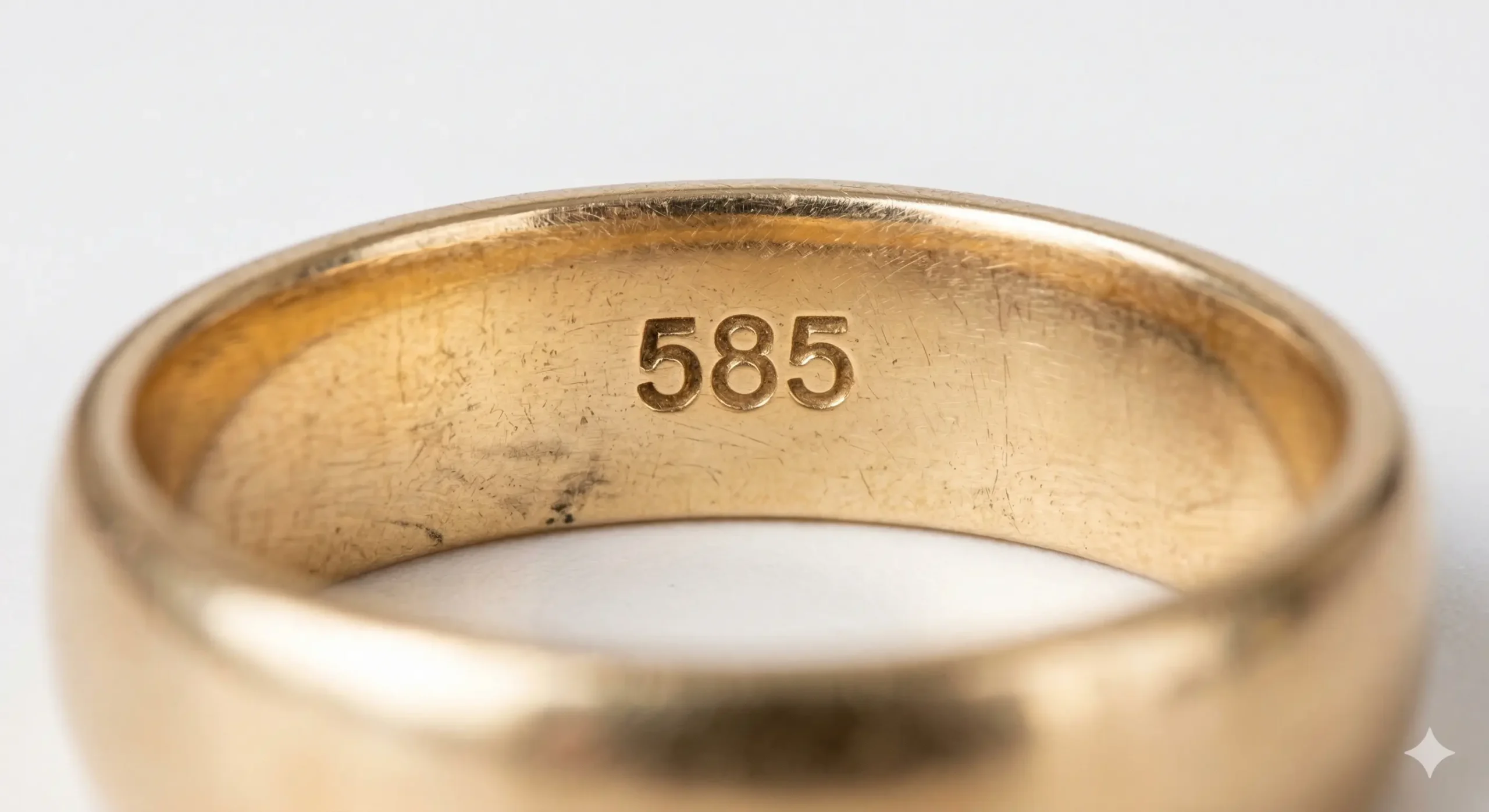
Does Gold Have a Stamp on It?
The first thing to check on any gold piece is the stamp. Real gold jewelry is almost always marked with its purity, either as a karat number (10K, 14K, 18K) or a three-digit millesimal fineness number (585, 750, 916). On a ring, look on the inside of the band. On a necklace or chain, check the clasp. On bracelets, check the clasp or inner surface. On earrings, check the post or backing.
What Do the Stamps on Gold Mean?
Does a 14K Stamp Always Mean Solid Gold?
No, not always. A plain 14K stamp means the entire piece is a solid 14 karat gold alloy. But if the stamp reads 14K GF, 14K GP, or 14KT GF, the piece is not solid gold. It has only a surface layer of gold bonded over a base metal.
| Marking | Full Name | Solid Gold? | What It Actually Is |
|---|---|---|---|
| GP | Gold Plated | No | Thin surface layer electroplated over base metal |
| GF | Gold Filled | No | Bonded gold layer, roughly 5% gold by total weight |
| GE | Gold Electroplated | No | Very thin layer applied electrically |
| HGP | Heavy Gold Plated | No | Thicker than GP but still not solid |
| HGE | Heavy Gold Electroplated | No | Thicker electroplated layer |
| RGP | Rolled Gold Plate | No | Mechanically bonded, not solid throughout |
The simple rule: A karat number alone (10K, 14K, 18K) means solid gold. Letters after the karat number mean it is not solid gold. A stamp is a starting point, not proof. Always confirm with at least one physical test below.
9 Ways to Tell if Gold is Real at Home
Does Gold Stick to a Magnet?
Real gold is not magnetic. If your piece is attracted to a magnet, it is not solid gold.
Hold a strong magnet close to the piece without touching it. If the piece pulls toward the magnet, the metal underneath is likely iron, steel, or nickel with a gold-colored coating over it.
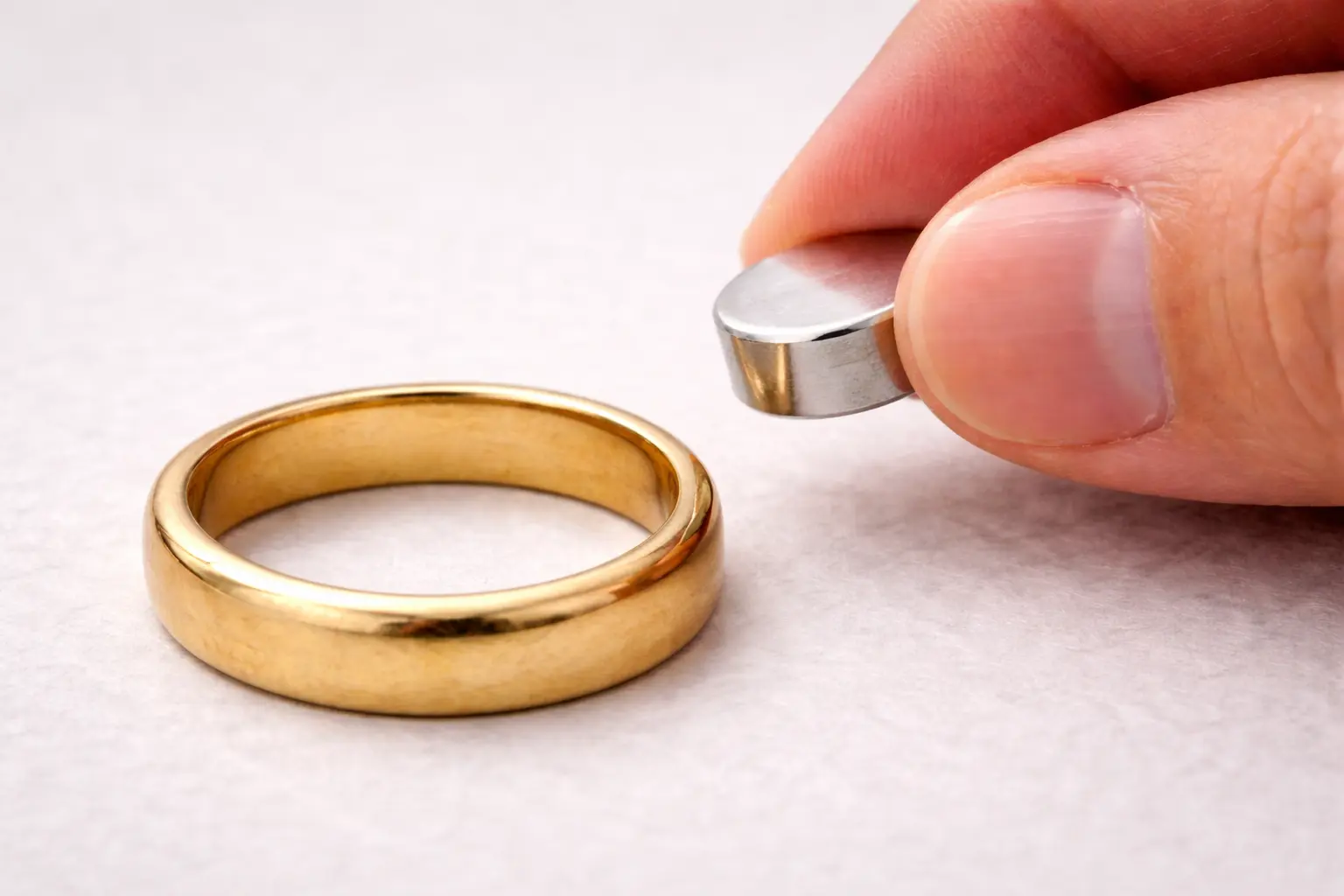
What you need: A neodymium rare-earth magnet. Standard fridge magnets are too weak to give a reliable result.
| Result | What It Means |
|---|---|
| Piece sticks to the magnet | Not solid gold |
| No reaction at all | Passes this test |
Not conclusive alone since some non-gold metals like brass and copper are also non-magnetic. Some real gold pieces have magnetic clasps, so test the gold body specifically, not the clasp.
Does Real Gold Sink in Water?
Real gold is dense and sinks immediately to the bottom. Fake gold floats or sinks slowly.
Drop the piece gently into a glass or bowl of water. Gold has a density of 19.3 g/cm3, which makes it far heavier than most other metals. If it floats or hovers mid-water, it is almost certainly not solid gold.
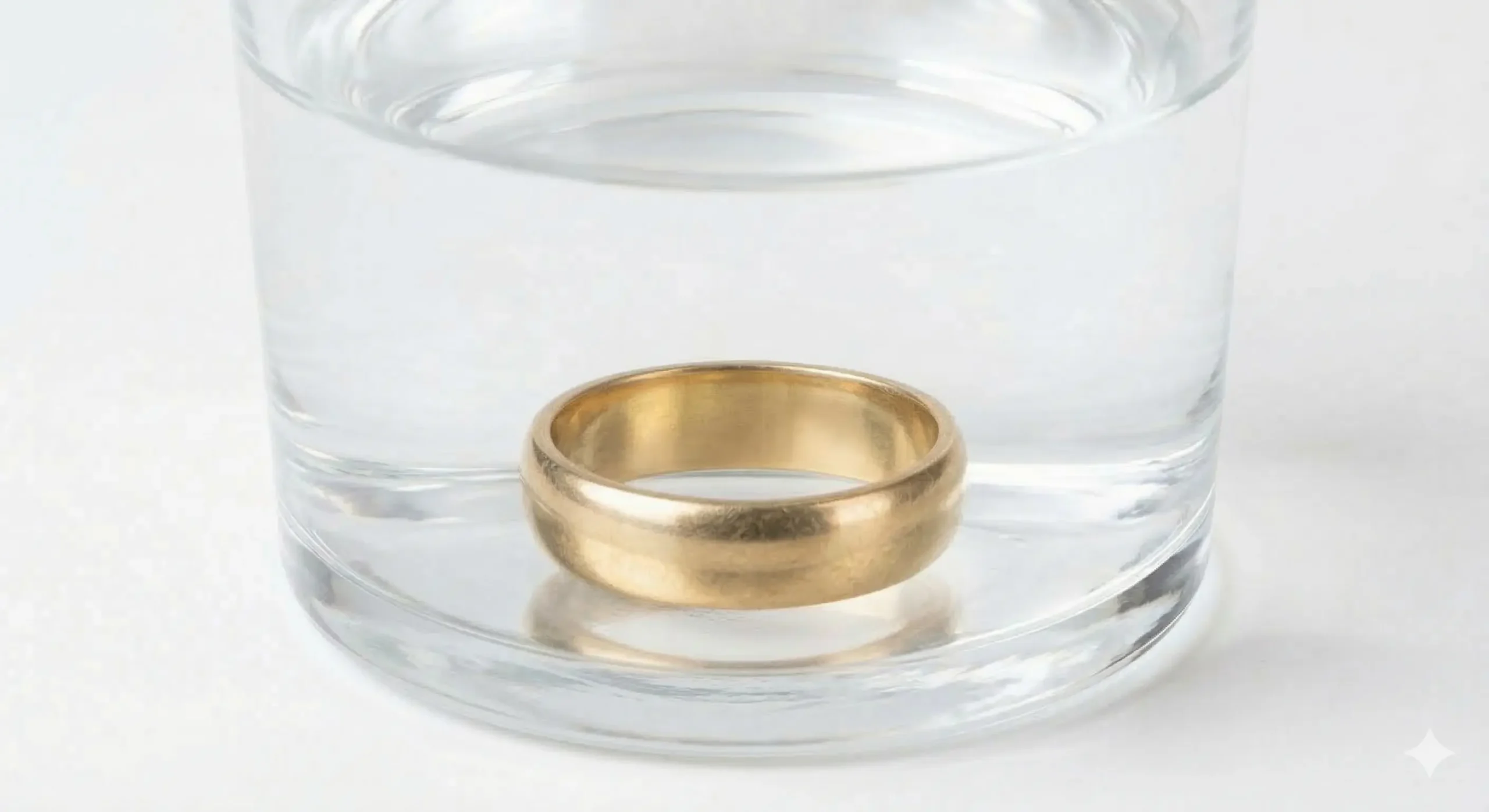
| Result | What It Means |
|---|---|
| Sinks straight to the bottom | Passes this test |
| Floats or hovers in the middle | Likely not real gold |
Hollow gold pieces can float even if genuine. Some dense fake metals also sink. Use alongside other tests rather than on its own.
The Scratch Test: Does Gold Leave a Yellow or Black Streak?
This is one of the most reliable ways to tell if gold is real or fake at home. Real gold leaves a gold or yellow streak on unglazed ceramic. Fake gold leaves a black or dark streak.
Find an unglazed ceramic surface. The rough back of a bathroom tile works perfectly. Drag the piece firmly across the surface with light, steady pressure.
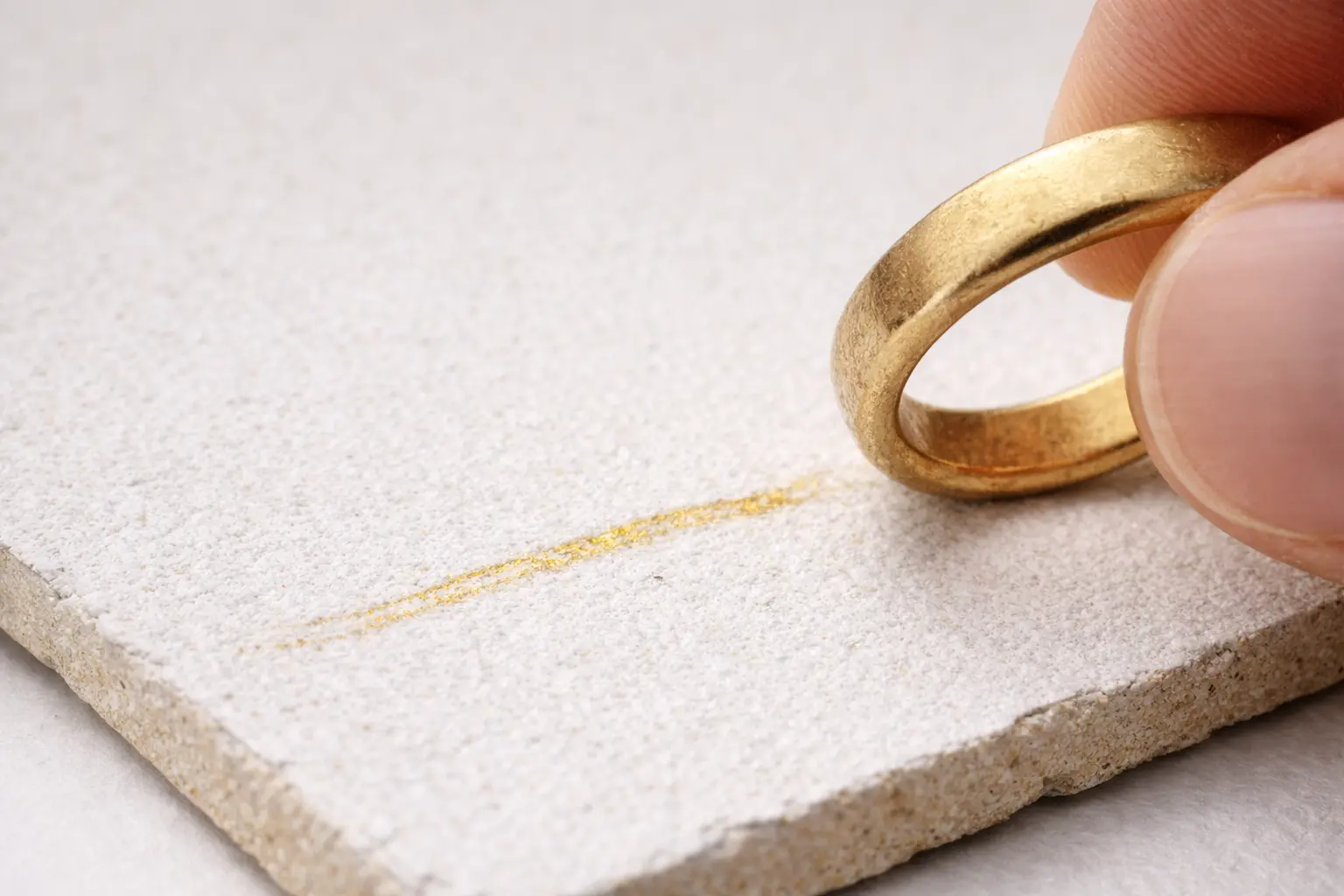
| Result | What It Means |
|---|---|
| Gold or yellow streak left behind | Likely real gold |
| Black or dark streak | Likely fake |
Caution: This test may leave a small scratch on the piece. Always test on a hidden or inconspicuous area first.
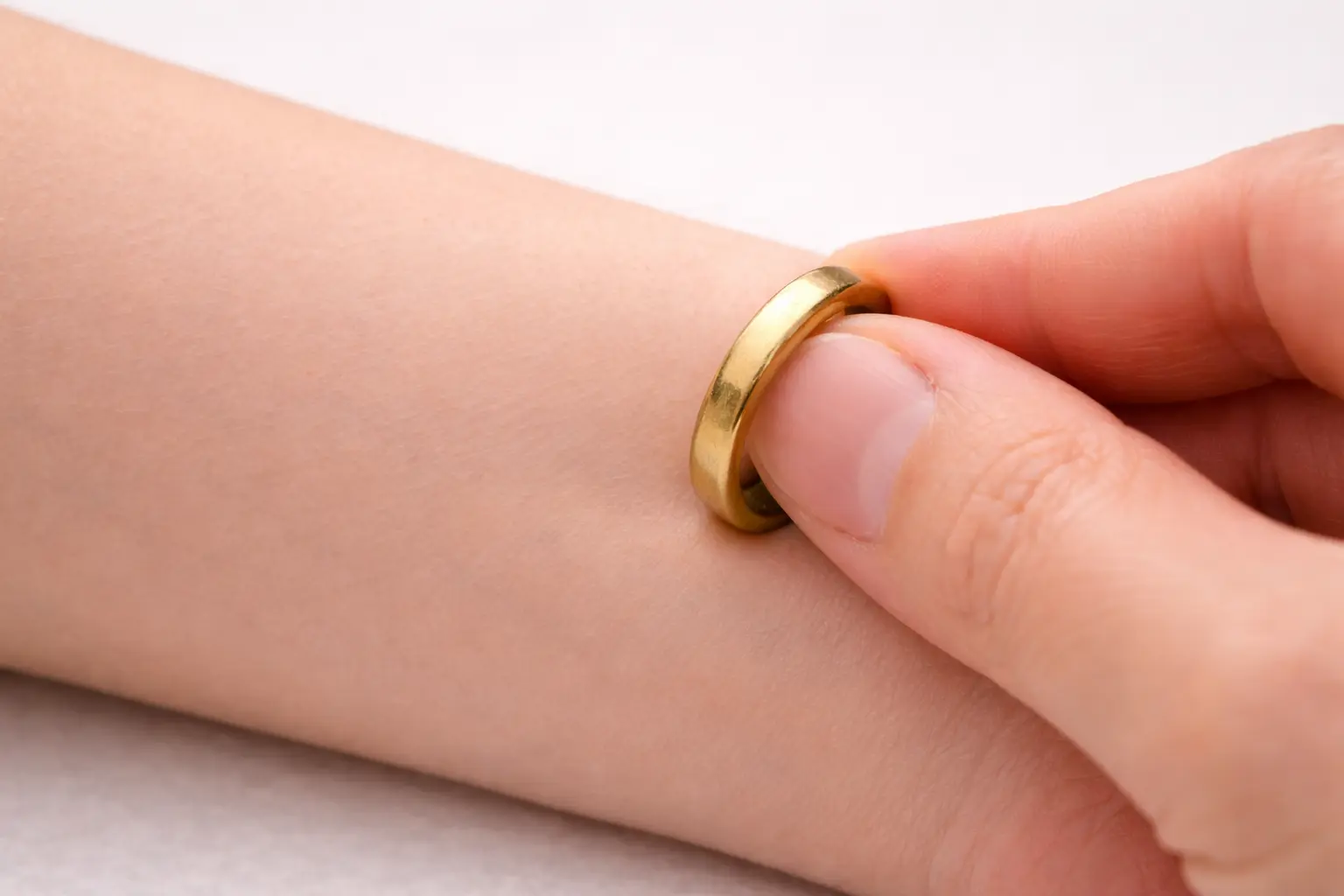
Does Real Gold Discolor Your Skin?
Real gold does not discolor your skin. Fake or base metal jewelry turns skin green, black, or blue.
Hold the piece between your palms or rub it firmly against the inside of your forearm for 30 to 60 seconds. Gold is hypoallergenic and chemically non-reactive. It does not react with your skin’s natural oils or sweat.
| Result | What It Means |
|---|---|
| No color change on skin | Passes this test |
| Green, black, or blue marks appear | Likely fake or base metal |
Lower karat gold like 10K contains more base metal and may cause slight discoloration in some people even if technically real. More reliable for higher karat pieces at 18K and above.
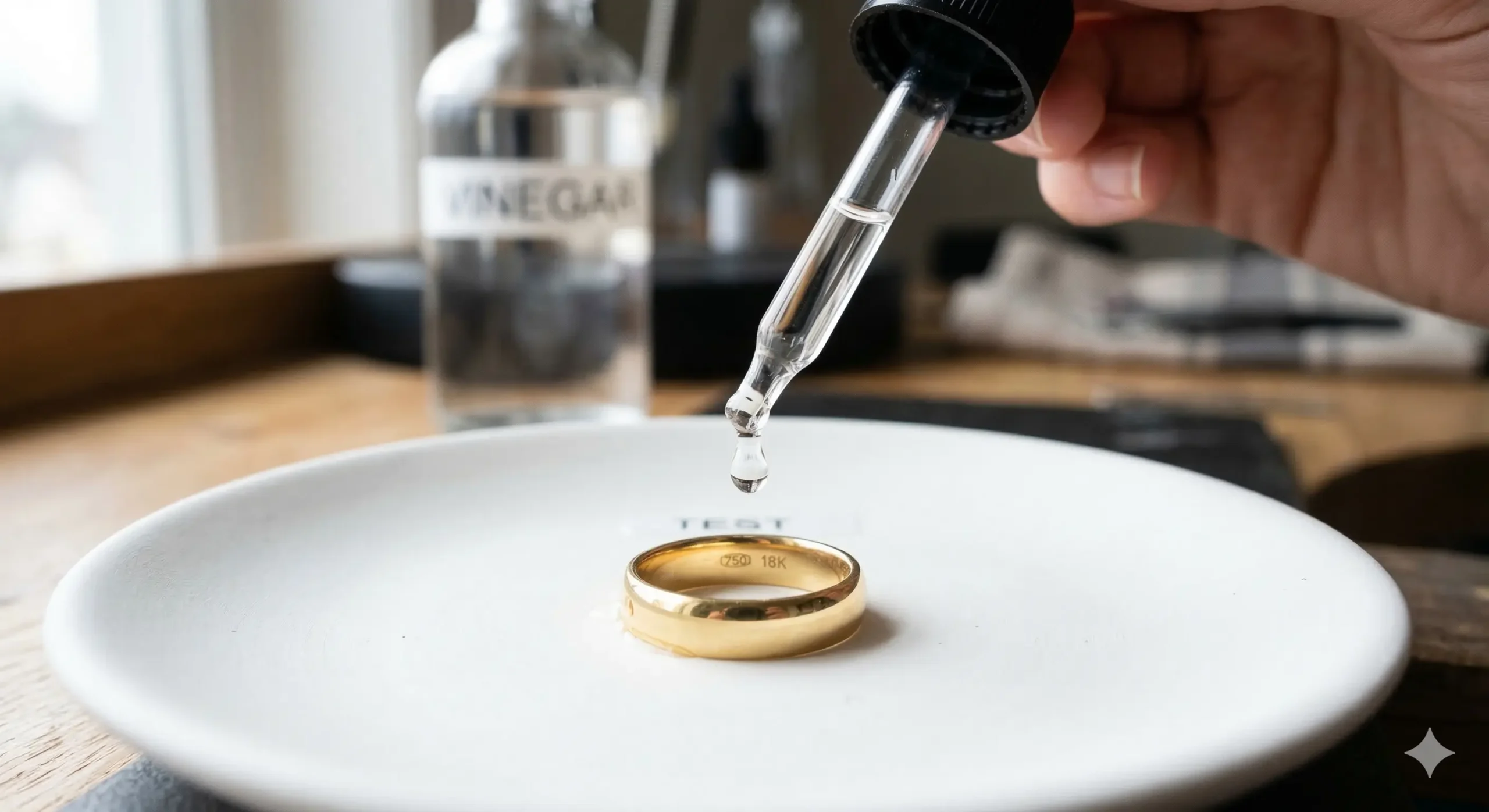
Does Vinegar Change Gold’s Color?
Real gold does not react to white vinegar. Fake gold changes color or darkens when exposed to it.
Apply a few drops of plain white distilled vinegar directly onto the piece, or submerge a small area for 15 seconds and observe closely.
| Result | What It Means |
|---|---|
| No color change whatsoever | Passes this test |
| Darkens, discolors, or visibly reacts | Likely not real gold |
Apply vinegar to a hidden area like the inside or back of the piece to avoid visible marks if the piece turns out to be fake.
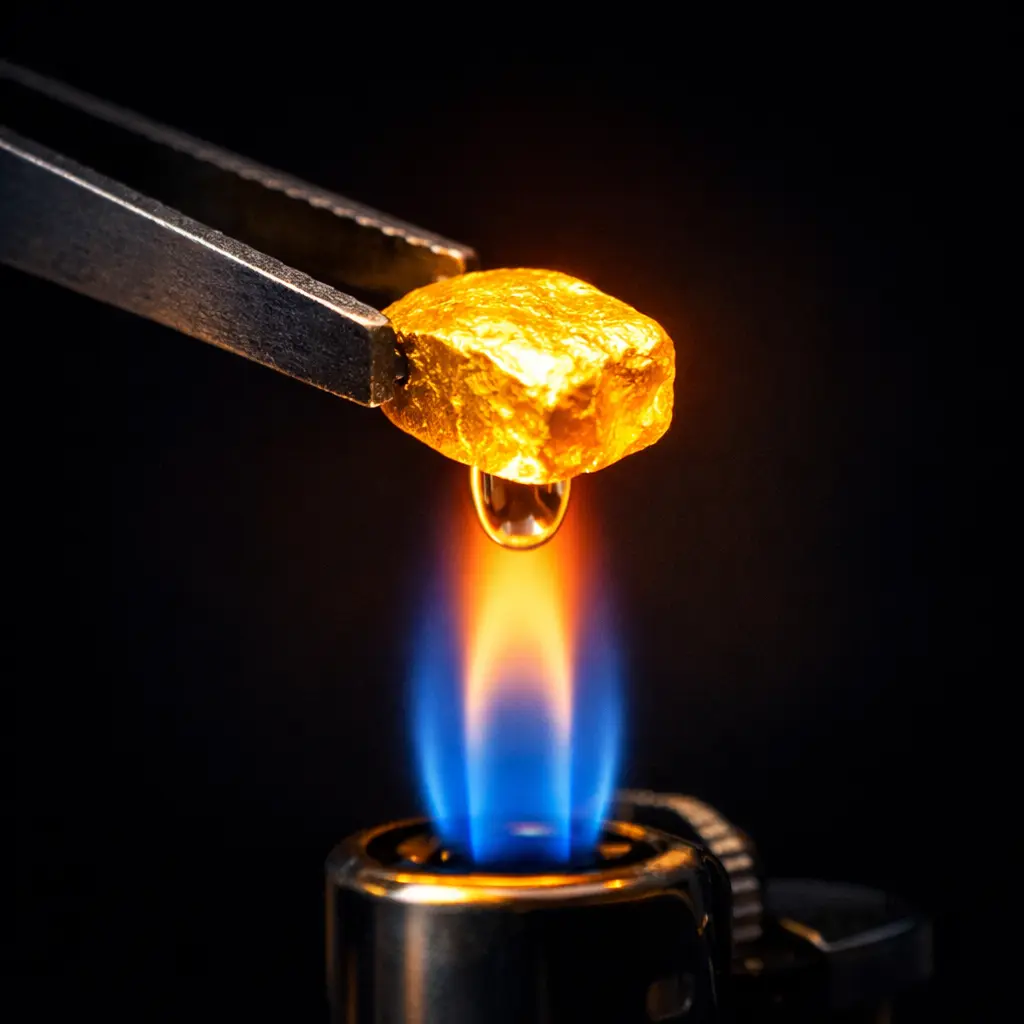
Does Real Gold Change Color With a Flame?
Real gold brightens under a flame and does not darken or smoke. Fake gold darkens, discolors, or smokes.
Using a butane lighter, hold the flame to the piece for 30 to 60 seconds. Use metal tongs or pliers since the piece will become very hot. Watch the surface closely throughout.
| Result | What It Means |
|---|---|
| Stays bright or glows warmer yellow | Passes this test |
| Darkens, turns black, or smokes | Likely fake |
Caution: Never use this test on pieces with gemstones. Heat can crack or shatter stones. Always hold the piece with pliers, never bare hands.
Does the Acid Test Confirm Real Gold?
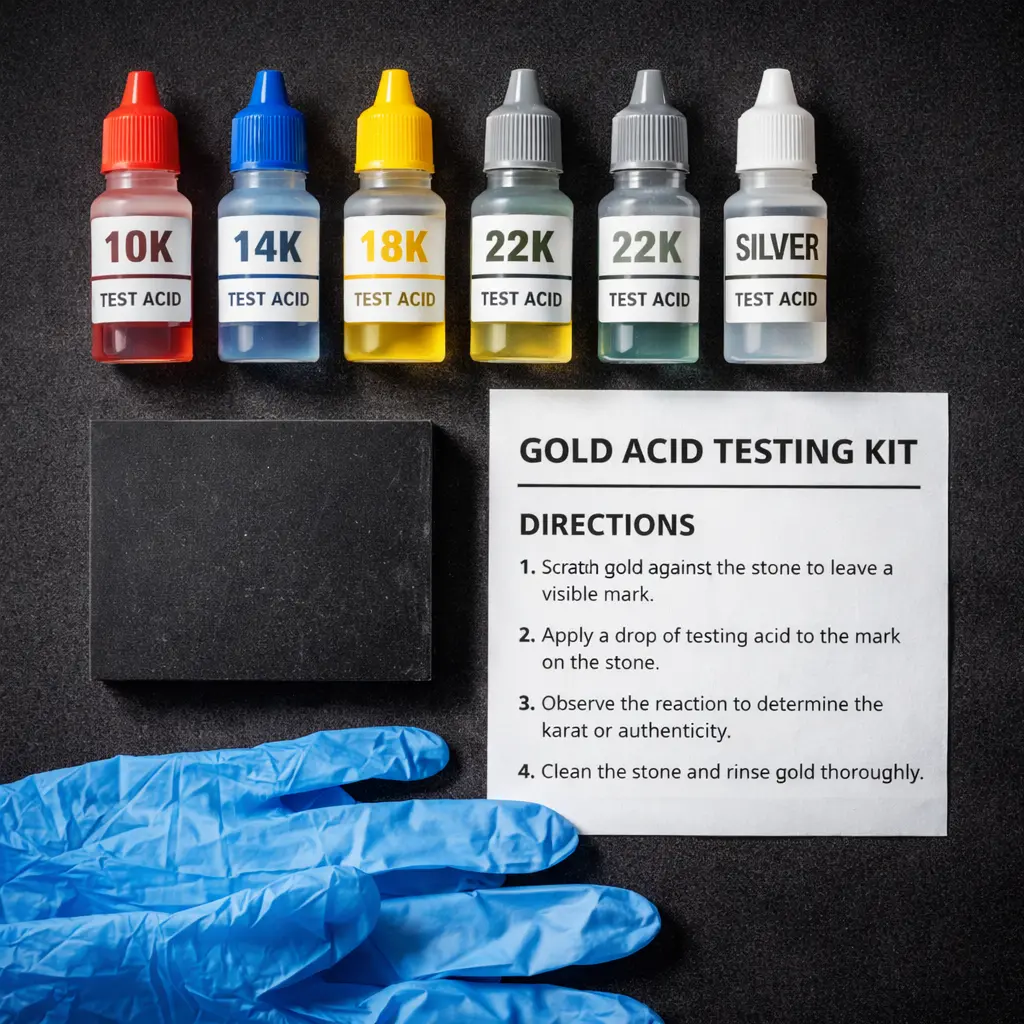
The acid test is the most accurate home method for confirming gold purity. A nitric acid testing kit dissolves base metals completely but leaves real gold untouched and unchanged. These kits are sometimes called gold testers and are the same tool professional gold buyers use at the counter. If you plan to sell, see what pawn shops actually pay for gold.
Gold testers are widely available online for around $20 to $30 and include multiple acid bottles matched to specific karat levels.
How to do it:
- Make a small scratch on an inconspicuous part of the piece to expose fresh metal
- Apply one drop of the acid that corresponds to the karat you are testing
- Observe the reaction for 30 seconds
| Result | What It Means |
|---|---|
| No reaction, color holds steady | Real gold at that karat level |
| Fizzes, dissolves, or turns green | Not real gold at that karat |
Safety: Wear gloves and eye protection. Work in a well-ventilated area. Keep acid away from skin. Dispose of used acid following kit instructions.
Does Real Gold Look and Feel Different?
Real gold has a specific color and weight that is difficult to fake convincingly. These visual clues are also useful for telling if gold is real or plated, since plated pieces almost always show surface wear over time. Use these observations to support your other test results, not as the only test.
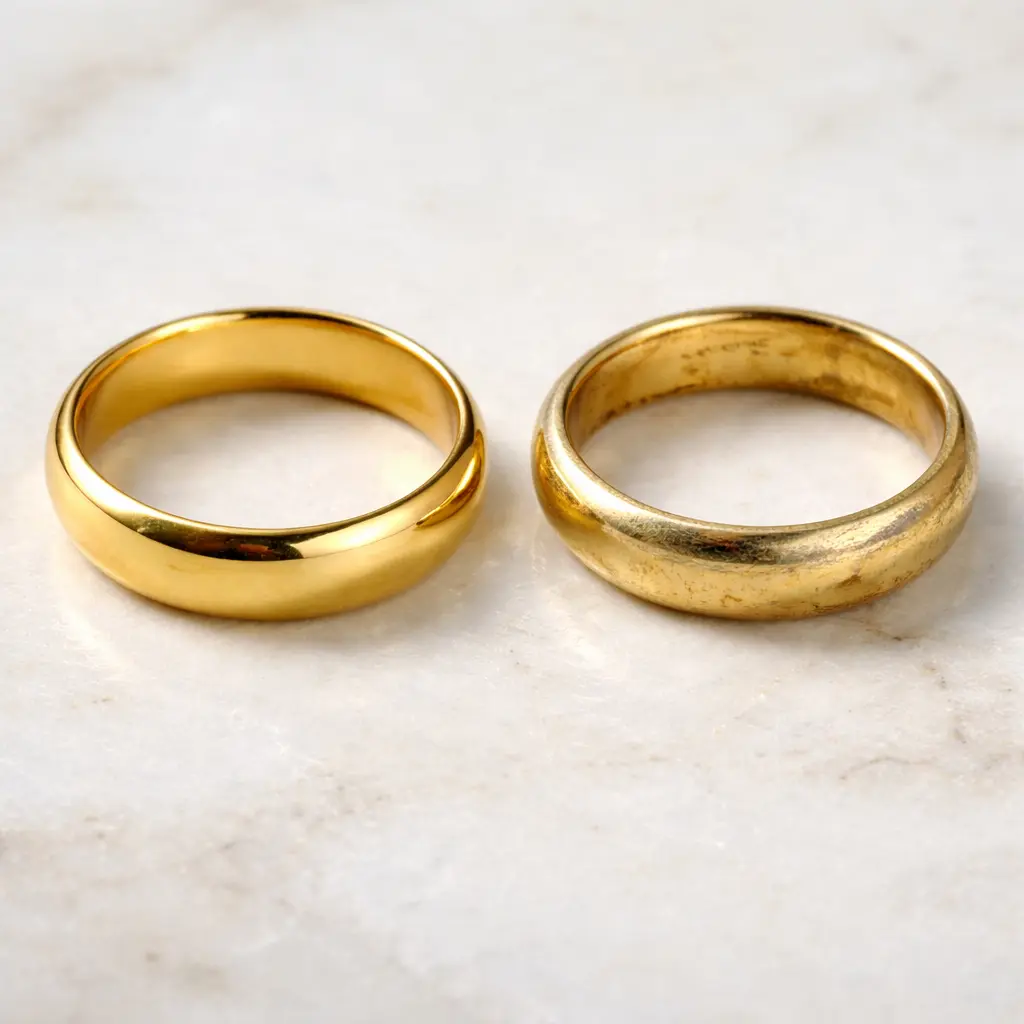
| What to Check | Real Solid Gold | Fake or Plated Gold |
|---|---|---|
| Color | Warm, rich, consistent yellow | Too bright, brassy, orange, or uneven |
| Weight | Noticeably heavy for its size | Surprisingly light for its size |
| Surface | No peeling, flaking, or color beneath | Surface wears away revealing base metal |
| Scratches | Minor surface scratches normal in high-karat gold | Deep flaking or color loss visible underneath |
When Should You Get Gold Tested Professionally?
Go to a professional jeweler or refiner when home tests give mixed results, or when the piece has significant value and you do not want to risk any damage from testing.
Professional testing uses X-ray fluorescence (XRF) scanners and electronic conductivity (EC) testers that identify exact metal composition without touching or scratching the piece at all.

When professional testing is worth going for:
- Home tests produce conflicting or unclear results
- The piece has no stamp and you cannot determine purity on your own
- The piece has high sentimental or monetary value you do not want to risk
- You plan to sell and want a certified evaluation to back up your asking price. Read the full gold selling guide before you go
Most jewelers will test gold for free or for a small fee. Specialist gold refiners test your gold as part of their evaluation process at no charge.
How Reliable Is Each Test?
| Test | What You Need | Reliability | Risk to Piece |
|---|---|---|---|
| Stamp check | Your eyes | Starting point only | None |
| Magnet test | Neodymium magnet | High | None |
| Acid test | Testing kit (~$25) | High | Minor scratch |
| Ceramic scratch | Unglazed tile | Medium-High | Minor scratch |
| Flame test | Butane lighter and tongs | Medium-High | Heat risk if mishandled |
| Float test | Glass of water | Medium | None |
| Vinegar test | White distilled vinegar | Medium | Minor mark possible |
| Skin test | Your forearm | Medium | None |
| Color and weight | Eyes and hands | Low alone | None |
| Professional XRF | Jeweler or refiner | Highest | None at all |
Can Fake Gold Have a Real-Looking Stamp?
Yes. Counterfeit pieces can and do carry false karat stamps. A stamp alone does not guarantee the piece is real gold. Always confirm with at least one physical test, especially for high-value pieces or items purchased from unknown sources.
That said, genuine GP, GF, and HGE markings are generally accurate. Manufacturers of gold-filled and gold-plated jewelry are legally required to label correctly under US Federal Trade Commission guidelines, so those non-gold markings tend to be honest even when karat stamps on fakes are not.
Frequently Asked Questions
No. Pure gold and solid gold alloys are not magnetic. If a piece is attracted to a strong magnet, it contains magnetic metals and is not solid gold. Some genuine gold pieces have magnetic clasps so always test the gold body of the piece specifically, not the clasp.
No. Solid gold does not tarnish, rust, or corrode. If a piece is losing its color, darkening, or showing a different metal through the surface, it is gold-plated, not solid gold.
The magnet test is the fastest and easiest since it requires only a strong neodymium magnet and takes about five seconds. It reliably rules out magnetic fakes. For a more accurate result, follow up with the ceramic scratch test or the vinegar test.
14K GF means 14 karat gold filled. The piece has a bonded layer of 14K gold over a base metal core. It is not solid gold. Gold filled contains significantly more gold than plated pieces but is still not considered real solid gold for scrap or melt value purposes.
Yes. Older pieces, especially antique jewelry made before hallmarking laws were enforced, may carry no stamp at all. The absence of a stamp does not mean a piece is fake. Run the physical tests above and consult a professional if results are unclear.
The karat stamp on the piece tells you. Look for 14K or 585 for 14 karat gold, and 18K or 750 for 18 karat gold. If there is no readable stamp, a professional acid test or XRF scan will identify the exact karat accurately and without guesswork.
So, Is Your Gold Real?
Start with the stamp. If it reads 10K, 14K, 18K, or the numeric equivalents like 585 or 750, you are looking at solid gold. If it says GP, GF, or HGE after the karat number, it is plated or filled, not solid.
From there, the magnet test takes five seconds and rules out the most obvious fakes. If the stamp and magnet both check out, you are almost certainly holding real gold. The scratch test or acid test can confirm it if you want to be certain.
When results are unclear or the piece has real value, skip the guesswork and take it to a jeweler or refiner. Most will test it free. A five-minute stop is worth it before you decide whether to keep it, sell it, or insure it.
The tests on this page tell you the piece is real. They do not tell you what it is worth. That depends on the karat, the weight, and today’s live gold price. The calculator below does the math in seconds.
Gold value depends on three things: weight, karat (purity), and the current live spot price of gold. Get your melt value in seconds, no signup needed.
Use the Free Gold Calculator